Whether you train competitively, hit the gym several times a week, or simply push yourself through demanding physical activity, recovery is where the real gains happen. Without adequate recovery, performance plateaus, injury risk rises, and the cumulative toll of training becomes harder to manage.
Red Light Therapy for muscle recovery is one of the most-searched athletic wellness topics right now, and for good reason. A growing body of research is exploring how red and near-infrared wavelengths may interact with muscle tissue, cellular energy systems, and inflammatory pathways in ways relevant to athletes and active individuals.
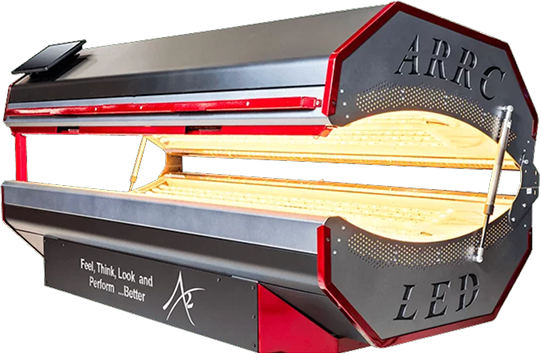
At Drip Lounge Surrey in South Surrey, BC, Red Light Therapy is delivered using the ARRC LED system, a clinical-grade full-body bed with six wavelengths and Naturopathic Doctor oversight at every session. This guide covers the science, the application, what to realistically expect, and how the ARRC LED system sets Drip Lounge apart for athletes across the Fraser Valley.
The Science Behind Red Light Therapy for Muscle Recovery
To understand why Red Light Therapy may support athletic recovery, it helps to understand what happens in the body after intense exercise. Physical training, particularly resistance training, high-intensity intervals, and endurance sports, creates microscopic stress in muscle fibers. This stress triggers an inflammatory response, which initiates repair and adaptation.
The challenge is that this inflammatory and repair process takes time, and when training loads are high, or recovery windows are short, the body may not fully recover between sessions. This is where muscle recovery therapy options, including Red Light Therapy, are increasingly explored by athletes.
Mitochondria and Cellular Energy
Red and near-infrared light may be absorbed by cytochrome c oxidase — a protein within mitochondria that plays a central role in cellular energy production. This absorption may stimulate increased ATP (adenosine triphosphate) production, the molecule cells use for energy. For muscle cells that have been stressed through exercise and are actively repairing, this increase in cellular energy availability may support the repair process.
Inflammatory Pathway Modulation
Inflammation is a necessary part of the recovery process — it is how the body signals repair. However, excessive or prolonged inflammation may hinder recovery and contribute to soreness and stiffness. Research has explored whether Red Light Therapy may help modulate inflammatory pathways, potentially supporting a more balanced inflammatory response without suppressing the process entirely.
Circulation and Tissue Oxygenation
Near-infrared light may support local circulation in treated areas, potentially improving oxygen and nutrient delivery to recovering muscle tissue. Improved circulation in recovering muscle may support the removal of metabolic waste products such as lactate, which contributes to post-exercise fatigue and soreness.
Why Wavelength Depth Matters for Athletes
Not all Red Light Therapy reaches muscle tissue. Surface-level red wavelengths (around 630–660nm) interact primarily with the skin and superficial tissue layers. For athletic recovery involving deeper muscle groups, tendons, and joint structures, near-infrared wavelengths (810nm and above) are more relevant because they penetrate further.
Here is how the six wavelengths in the ARRC LED system at Drip Lounge Surrey map to tissue depth relevant to athletic recovery:
| Wavelength | Type | Relevance to Athletic Recovery |
| 630–660nm | Red light | Surface tissue, skin, and superficial muscle layer interaction |
| 810–850nm | Near-infrared | Deeper muscle tissue, tendons, and joint structures |
| 940nm | Near-infrared | Deepest penetration; mitochondrial energy support in deeper tissue |
Most standard Red Light Therapy beds used in gyms, wellness studios, and consumer settings operate on two wavelengths — typically one red and one near-infrared. The ARRC LED system at Drip Lounge Surrey delivers six wavelengths simultaneously, offering a broader range of tissue interaction in a single session. For athletes focused on deeper muscle recovery, this distinction matters.
The ARRC LED System at Drip Lounge Surrey: Built for Clinical Outcomes
Drip Lounge Surrey is equipped with the ARRC LED full-body canopy bed, a professional system designed for clinical wellness settings rather than the consumer market. Here is how it compares to a standard Red Light Therapy bed:
| Feature | Standard RLT Bed | ARRC LED — Drip Lounge Surrey |
| Wavelengths | Typically 2 | 6 simultaneous wavelengths |
| Body coverage | Front or back only | Full-body canopy on both sides at once |
| Tissue penetration | Varies by wavelength range | Deep near-infrared reaches muscle and connective tissue |
| UV exposure | Low or none | Zero fully outside the UV spectrum |
| Supervision | Rarely included | Naturopathic Doctor oversight every session |
The full-body canopy means the front and back of the body receive simultaneous exposure critical for athletes working on full-body recovery rather than targeting a single area. Sessions are brief, typically 10 to 20 minutes, and are supervised by Naturopathic Doctors who help tailor the approach to your training schedule and recovery goals.
When and How Red Light Therapy Fits Into an Athletic Recovery Routine
Understanding where Red Light Therapy fits within the phases of post-exercise recovery helps clarify when it may be most useful and how to time sessions alongside training.
| Recovery Phase | What Happens in the Body | How RLT May Support It |
| Immediately post-exercise | Micro-tears in muscle fibre; inflammation begins | May modulate initial inflammatory response at cellular level |
| 24–48 hours after | DOMS peaks; protein synthesis and tissue repair active | Near-infrared wavelengths may support cellular energy for repair |
| 48–72+ hours | Inflammation resolves; muscle rebuilds stronger | Collagen and connective tissue repair may be supported |
Many athletes in Surrey, Langley, White Rock, and the Fraser Valley explore Red Light Therapy sessions on rest days or within a few hours after training when the body is actively in repair mode. Timing is personal and may vary based on your training type, session intensity, and overall recovery plan. The Naturopathic Doctors at Drip Lounge Surrey may help you build a session schedule around your training calendar.
Red Light Therapy After Workout: What to Know
Red Light Therapy after a workout is one of the most common ways athletes at Drip Lounge Surrey explore the modality. Post-training sessions allow Red Light Therapy to interact with muscle tissue while the body is in the early stages of its recovery response.
There is no requirement to shower before a session, though clean skin without heavy topical products is generally preferred. Sessions are quick — most athletes complete their full visit at Drip Lounge Surrey within 30 to 45 minutes and return to the rest of their day without any downtime.
Pairing Red Light Therapy after a workout with adequate nutrition, protein intake, hydration, and sleep remains essential. Red Light Therapy is a wellness addition to a comprehensive recovery routine, not a substitute for the fundamentals.
Red Light Therapy and Athletic Performance: What the Research Suggests
Beyond recovery, some research has explored whether consistent Red Light Therapy may support aspects of physical performance over time. Studies have investigated parameters including muscular endurance, strength output, and time to fatigue — with some showing positive associations in trained populations following consistent exposure protocols.
It is important to frame these findings carefully. The majority of performance-related research involves Red Light Therapy as part of a structured training and recovery protocol over multiple weeks — not as a one-time intervention. The mechanisms proposed relate to improved mitochondrial efficiency, better oxygen utilization in muscle tissue, and faster recovery between sessions leading to greater training consistency.
For athletes in Surrey and the Fraser Valley looking for a non-pharmaceutical, non-invasive wellness addition to their training approach, Red Light Therapy represents a genuinely research-explored option. It is not a performance-enhancing drug, does not appear on banned substance lists, and is permissible across sport disciplines.
Which Athletes and Active Individuals Explore Red Light Therapy at Drip Lounge Surrey?
Red Light Therapy for muscle recovery and athletic performance is explored across a wide range of activity types and fitness levels:
- Endurance athletes – runners, cyclists, and triathletes managing high training volumes and cumulative fatigue
- Strength and resistance training athletes – those seeking to support muscle repair and reduce DOMS between sessions
- Team sport athletes in Langley, Surrey, and White Rock – managing in-season training loads and match recovery
- Combat sport athletes – exploring recovery support between hard sparring and competition cycles
- Masters and recreational athletes – active adults whose recovery naturally takes longer and who seek proactive support
- Fitness enthusiasts and gym-goers – those training consistently and wanting to optimise their recovery routine
Red Light Therapy is not exclusively for elite athletes. Anyone who trains regularly and wants to explore evidence-informed wellness support for their recovery routine may find it worth discussing with a Naturopathic Doctor at Drip Lounge Surrey.
Combining Red Light Therapy with IV Therapy for Athletic Recovery at Drip Lounge Surrey
Many athletes at Drip Lounge Surrey choose to combine their Red Light Therapy session with IV Therapy on the same visit — addressing cellular recovery from multiple angles simultaneously. Red Light Therapy works at the level of cellular energy and tissue interaction; IV Therapy delivers the nutrients the body needs to support that recovery process.
| IV Therapy Option | Athletic Recovery Focus | Commonly Paired With RLT For |
| Myers Cocktail IV | B vitamins, Vitamin C, magnesium, calcium | Energy replenishment and general recovery support |
| NAD+ IV | Cellular energy and mitochondrial support | Deep recovery, energy depletion, post-competition |
| IV Hydration | Fluid and electrolyte replenishment | Post-training dehydration and muscle cramp support |
| Glutathione IV | Antioxidant support; oxidative stress reduction | Post-exertion recovery and inflammation balance |
All combination decisions are discussed with a Naturopathic Doctor at Drip Lounge Surrey based on your individual training demands, health background, and wellness goals.
Frequently Asked Questions
Is red light therapy proven for muscle recovery?
A growing body of peer-reviewed research suggests Red Light Therapy may support muscle recovery by modulating inflammation, supporting cellular energy production, and improving circulation in treated tissue. Results vary between individuals and study designs. It is not an assured intervention, but the research basis is substantive enough to have attracted serious scientific and clinical interest.
How long should you do red light therapy for muscle recovery?
Sessions typically last 10 to 20 minutes inside the ARRC LED bed at Drip Lounge Surrey. Session duration and frequency are guided by a Naturopathic Doctor based on your training volume and recovery goals. For most athletes, two to three sessions per week during a training block is a common starting point.
Does red light therapy actually help with athletic performance?
Some research has shown positive associations between consistent Red Light Therapy and parameters including muscular endurance, strength output, and recovery between sessions. These findings are not universal and depend on training context, session frequency, and individual response. Red Light Therapy may support performance indirectly by enabling faster recovery and more consistent training.
Who may not be suited to red light therapy?
Red Light Therapy may not be appropriate for pregnant individuals, those taking photosensitive medications, people with active skin infections or open wounds in areas to be treated, or individuals with certain light-sensitive conditions. A Naturopathic Doctor at Drip Lounge Surrey reviews every client’s health background before their first session.
What should you not do after red light therapy?
Avoid prolonged direct sun exposure on treated areas immediately after a session. Skip the sauna or steam room if your body feels warm after the session. Hydrate well. Otherwise, most athletes return directly to normal activity or post-training routine without restriction.
What happens if I use red light therapy every day?
Daily use is not always more effective than well-spaced sessions. Red Light Therapy works through cumulative, gradual biological processes, and adequate time between sessions allows the body to respond. The Naturopathic Doctors at Drip Lounge Surrey will help you find a frequency that supports your training schedule without overdoing it.
What are the potential downsides of red light therapy?
When used appropriately in a supervised clinical setting, Red Light Therapy has a strong safety profile. Potential downsides include: eye discomfort if proper protective eyewear is not worn, temporary skin sensitivity in those who are photosensitive, and unrealistic expectations leading to disappointment if results are not immediate. These are largely mitigated by professional oversight and proper intake consultation.
Why don’t more doctors routinely recommend red light therapy?
Red Light Therapy sits in a space where research is active but still developing. Many conventional medical practitioners maintain a cautious position toward modalities not yet embedded in clinical guidelines, even when the research is promising. Naturopathic Doctors, trained to incorporate evidence-informed wellness modalities, are often more up to date on the Red Light Therapy literature. At Drip Lounge Surrey, Naturopathic Doctors are available to discuss the research and help you make an informed decision.
Red Light Therapy for Muscle Recovery in Surrey, BC: The Takeaway
Red Light Therapy for muscle recovery and athletic performance is one of the more compelling non-invasive wellness modalities available to athletes today. The science is substantive, the safety profile is strong, and the clinical-grade ARRC LED system at Drip Lounge Surrey offers one of the most advanced delivery options in the Fraser Valley.
For athletes and active individuals in South Surrey, White Rock, Langley, and across the Lower Mainland looking to get more from their recovery routine, Drip Lounge Surrey offers a professionally supervised, personalized wellness experience designed around your training demands and health goals.
Ready to explore Red Light Therapy for muscle recovery in Surrey, BC?
Speak with the Drip Lounge Surrey team to find out whether ARRC LED Red Light Therapy aligns with your training and recovery goals.
Visit driplounge.ca or call +1 604-630-5813 to book your consultation.