Not all Red Light Therapy is the same. One of the most important factors determining whether a Red Light Therapy session may actually deliver on your wellness goals is wavelength- the specific nanometre measurement of the light being used. Yet most people researching Red Light Therapy in Surrey, BC never think to ask about wavelengths, and many clinics do not make this information easy to find.
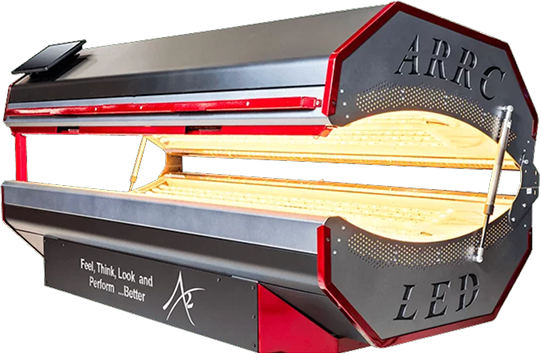
At Drip Lounge Surrey, located at 15222 32 Ave Diversion in South Surrey, BC, Red Light Therapy is delivered using the ARRC LED system, a clinical-grade full-body LED bed that operates on six wavelengths simultaneously: 538nm (green), 633nm, 660nm, 810nm, 850nm, and 940nm. Most standard beds use two. This article explains what each wavelength does, how to match wavelengths to your specific wellness goals, and why the depth of coverage matters for your Red Light Therapy session results.
Please note: Red Light Therapy is a wellness modality. It is not approved to diagnose or treat any medical condition. Individual results vary. This article is educational and does not substitute professional health advice.
What Is a Wavelength and Why Does It Matter for Red Light Therapy?
Wavelength refers to the distance between peaks of a light wave, measured in nanometres (nm). Different wavelengths of light carry different amounts of energy and penetrate tissue to different depths. This is not a minor technical detail; it is the fundamental reason why some Red Light Therapy sessions may be more relevant to your goals than others.
Red light, in the 620 to 700nm range, is visible and primarily interacts with the skin’s surface layers, the epidermis and upper dermis. Near-infrared light, from around 700nm upward, is invisible to the eye and penetrates progressively deeper into tissue, reaching muscle, joints, and even bone at higher wavelengths.
The biological mechanism is the same across wavelengths: light is absorbed by mitochondria in cells, potentially stimulating ATP (adenosine triphosphate) production and supporting various cellular processes. What differs is which cells are being reached and therefore which wellness goals are being addressed.
Each Wavelength Explained: From 538nm to 940nm
Here is a breakdown of each wavelength in the ARRC LED system, what the research suggests it may interact with, and what wellness goals it is most commonly associated with:
| Wavelength | Type | Tissue Depth | Primary Wellness Application |
| 538nm | Green | Superficial skin surface | Skin tone and surface-level wellness research |
| 633nm | Red | Epidermis and upper dermis | Fibroblast stimulation, skin tone, early collagen support |
| 660nm | Red | Upper to mid dermis | Collagen and elastin support, skin rejuvenation, wound healing research |
| 810nm | Near-Infrared | Mid dermis into superficial muscle | Muscle recovery, joint comfort, deeper cellular energy support |
| 850nm | Near-Infrared | Deeper muscle and connective tissue | Athletic recovery, inflammation modulation, deeper tissue repair |
| 940nm | Near-Infrared | Deepest penetration: muscle, joint, bone tissue | Deep tissue recovery, vascular support, mitochondrial energy at depth |
A Note on 538nm (Green Light)
The ARRC LED system also includes 538nm green light, which is not commonly found in standard Red Light Therapy beds. Green light sits at a shallower penetration depth than red wavelengths and is explored in some research for its potential interactions with vascular and skin surface pathways. Its inclusion in the ARRC system is one of the features that distinguishes it from most consumer and clinic-grade alternatives in the Fraser Valley.
How to Match Wavelengths to Your Red Light Therapy Goals
Understanding which wavelengths align with your specific wellness goals is what separates an informed Red Light Therapy treatment decision from a guesswork one. The table below maps the most common wellness goals to the wavelengths most likely to be relevant:
| Your Primary Goal | Most Relevant Wavelength(s) | Why |
| Skin wellness and complexion | 633nm, 660nm | Red wavelengths interact with fibroblasts and skin surface layers where collagen and melanin activity occur |
| Muscle recovery after training | 810nm, 850nm | Near-infrared penetrates beyond the skin into muscle tissue where repair and energy production happen |
| Joint comfort and mobility | 850nm, 940nm | Deeper wavelengths reach joint structures, tendons, and connective tissue |
| Cellular energy and vitality | 810nm, 850nm, 940nm | Near-infrared stimulates mitochondrial activity in deeper tissues where systemic cellular energy effects are proposed |
| Sleep and relaxation support | 633nm, 660nm, 810nm | Red wavelengths support melatonin-neutral light exposure; near-infrared may support parasympathetic nervous system activity |
| Comprehensive full body session | All 6 simultaneously (ARRC LED) | Multi-wavelength coverage addresses surface and deep tissue goals in a single full body Red Light Therapy session |
This is why a full body Red Light Therapy session at Drip Lounge Surrey, delivered through the ARRC LED system’s six simultaneous wavelengths, may address multiple wellness goals within a single session something a two-wavelength bed is structurally unable to do.
Why More Wavelengths Matter: The ARRC LED Advantage at Drip Lounge Surrey
When comparing Red Light Therapy providers in Surrey and the Fraser Valley, wavelength count is one of the most meaningful differentiators yet one of the least discussed. A two-wavelength bed delivers light at two specific depths. Everything between and beyond those depths goes uncovered. For clients with layered wellness goals, skin health and muscle recovery, for example, a two-wavelength bed is inherently limited.
The ARRC LED system at Drip Lounge Surrey delivers six wavelengths simultaneously across the full span of red and near-infrared ranges, from the skin surface through to deep tissue. This is not simply a marketing advantage; it represents a fundamentally broader range of cellular interaction within every Red Light Therapy session.
| Feature | Standard RLT Bed (2 Wavelengths) | ARRC LED Drip Lounge Surrey (6 Wavelengths) |
| Wavelengths delivered | Typically 1 red + 1 near-infrared | 633nm, 660nm, 538nm (green), 810nm, 850nm, 940nm simultaneously |
| Tissue depth range | Limited to the two wavelengths’ penetration depths | Covers surface skin through deepest tissue in one session |
| Goal versatility | Suited to one or two specific goals | Addresses skin, muscle, joint, energy, and relaxation simultaneously |
| Body coverage | Front or back only | Full-body canopy both sides simultaneously |
| UV exposure | Low or none | Zero all wavelengths outside the UV spectrum |
| Clinical supervision | Rarely included | Naturopathic Doctor oversight at every session |
For residents of South Surrey, White Rock, Langley, and the broader Fraser Valley looking for a Red Light Therapy treatment that goes beyond a single-goal session, the ARRC LED system at Drip Lounge Surrey is one of the most comprehensive options in the region. Every session is supervised by an experienced Naturopathic Doctor who helps personalize the approach to your specific goals.
How to Choose the Right Red Light Therapy for You
Given what you now know about wavelengths, here is a practical framework for evaluating any Red Light Therapy option at Drip Lounge Surrey or anywhere else.
Ask About the Wavelengths Used
Any reputable Red Light Therapy clinic should be able to tell you exactly which wavelengths their equipment delivers. If the answer is vague, “red and infrared” without specific nanometre values, that is worth questioning. The ARRC LED system at Drip Lounge Surrey delivers 538nm, 633nm, 660nm, 810nm, 850nm, and 940nm.
Assess Whether Coverage Matches Your Goals
If your primary goal is skin wellness, red wavelengths (630–660nm) are most relevant. If you are focused on muscle recovery or joint comfort, near-infrared (810–940nm) is where the meaningful tissue penetration occurs. If you have multiple goals, a multi-wavelength system like the ARRC LED is the only way to address them in a single Red Light Therapy session.
Check That the Session Is Supervised
Clinical supervision matters not just for safety, but for personalization. A Naturopathic Doctor at Drip Lounge Surrey reviews your health background, discusses your goals, and helps you understand which wavelengths, session frequency, and duration align with your individual situation. This is something a walk-in wellness studio or home device simply does not offer.
Getting Started with Red Light Therapy at Drip Lounge Surrey: What It Costs
Drip Lounge Surrey follows a transparent, patient-status-based consultation fee structure. The table below reflects the pricing from driplounge.ca/getting-started/. The cost of your Red Light Therapy session itself is separate and discussed during your consultation:
| Patient Type | Consultation Fee | What Is Included |
| New Patient | $100 | 60-min consultation, health assessment, Naturopathic Doctor recommendations. Red Light Therapy session cost is additional. |
| Existing Patient | $0 | Treatment cost only. Brief check-in and monitoring included. |
| Re-admission (1+ year gap) | $50 re-admission fee | Required after a gap of more than one year. Includes updated health review. |
For current Red Light Therapy session pricing, contact Drip Lounge Surrey at +1 604-630-5813 or visit driplounge.ca. Your Naturopathic Doctor will outline the full cost and recommended session frequency during your intake consultation.
Frequently Asked Questions:
What is the difference between 660nm and 850nm?
660nm is a red wavelength that interacts primarily with the upper dermis and is most associated with skin wellness, collagen and elastin support, and surface-level fibroblast activity. 850nm is a near-infrared wavelength that penetrates significantly deeper, reaching muscle tissue, tendons, and connective tissue. For skin-focused goals, 660nm is more relevant. For recovery, joint comfort, and deeper tissue support, 850nm is the more applicable wavelength. The ARRC LED system at Drip Lounge Surrey delivers both simultaneously.
What wavelength should your red light therapy be?
The right wavelength depends entirely on your wellness goals. Skin wellness and complexion goals are best served by 630–660nm red wavelengths. Muscle recovery, joint comfort, and cellular energy goals are better addressed by 810–940nm near-infrared wavelengths. For comprehensive full-body Red Light Therapy benefits covering multiple goals, a multi-wavelength system like the ARRC LED, which delivers six wavelengths from 538nm to 940nm, is the most versatile option available in Surrey and the Fraser Valley.
Is 633nm enough for red light therapy?
633nm may be sufficient for surface-level skin wellness goals such as complexion support and early collagen activity. However, it does not penetrate deeply enough to address muscle recovery, joint comfort, or deeper cellular energy goals. For a comprehensive Red Light Therapy treatment, 633nm is best used alongside deeper-penetrating wavelengths such as 660nm, 810nm, and 850nm.
Is 633 or 660 red light better?
Neither is universally better; they serve slightly different purposes. 633nm interacts with the most superficial skin layers. 660nm penetrates a little deeper into the dermis, making it more relevant for fibroblast stimulation, collagen and elastin support, and skin rejuvenation. If you are choosing between the two for skin wellness goals, 660nm is generally considered the more therapeutically active wavelength in the scientific literature.
Is 850nm or 940nm better?
Both are near-infrared wavelengths with significant tissue penetration, and they serve related but slightly different applications. 850nm is the more extensively studied wavelength for muscle recovery and athletic performance, with a well-documented interaction with mitochondria in muscle tissue. 940nm penetrates even deeper, reaching joint structures and bone-adjacent tissue, and is associated with deeper vascular and tissue recovery applications. For athletic recovery, 850nm is the primary reference. For joint and deep tissue support, 940nm offers additional depth.
What is 940nm good for?
940nm is a deep-penetrating near-infrared wavelength associated with the deepest tissue interaction available in Red Light Therapy. It may support joint comfort, connective tissue wellness, deeper mitochondrial energy support, and vascular-level recovery processes. It is particularly relevant for individuals with deep-tissue recovery goals, joint mobility concerns, or those seeking systemic cellular energy support.
How to pick the right red light therapy?
Start by identifying your primary wellness goal. Skin goals point to red wavelengths (630–660nm). Recovery and deep tissue goals point to near-infrared (810–940nm). Multiple goals suggest a multi-wavelength system. Then assess the equipment: ask what wavelengths are used, whether the device offers full-body coverage, and whether sessions are supervised. At Drip Lounge Surrey, the intake consultation with a Naturopathic Doctor is specifically designed to answer these questions for your individual situation.
How to tell if red light therapy is good?
Signs of a quality Red Light Therapy offering include: specific wavelength information (exact nanometre values, not just “red and infrared”), clinical-grade equipment with known intensity specifications, full-body or targeted coverage appropriate to your goals, Naturopathic Doctor or medically supervised administration, and an intake process that personalises the session to your health background. The ARRC LED system at Drip Lounge Surrey meets all of these criteria and delivers six wavelengths across a full-body canopy, one of the most complete Red Light Therapy treatment options in the Fraser Valley.
Red Light Therapy Wavelengths in Surrey, BC: The Takeaway
Wavelength is the detail that separates a Red Light Therapy session that may meaningfully support your goals from one that simply exposes you to light. Understanding what each wavelength does and which ones your chosen equipment actually delivers is the most practical piece of information you need when evaluating any Red Light Therapy option in Surrey or the Fraser Valley.
At Drip Lounge Surrey, the ARRC LED system’s six simultaneous wavelengths, full-body canopy design, and Naturopathic Doctor supervision offer a genuinely comprehensive Red Light Therapy treatment experience. Whether your goals are skin wellness, physical recovery, joint comfort, cellular energy, or a combination of all four, the wavelength coverage is there.
Ready to experience multi-wavelength Red Light Therapy in Surrey, BC?
Speak with the Drip Lounge Surrey team to explore whether the ARRC LED system aligns with your wellness goals and find out which wavelengths are most relevant to you.
Visit driplounge.ca or call +1 604-630-5813 to book your consultation.